When most people picture Pilates, they think of Reformers lined up in a studio thanks to the growing popularity of Reformer group classes. While the Reformer is indeed iconic (and ideal for group classes), it’s just one part of a much bigger picture. Joseph Pilates created an entire system of apparatus designed to support, challenge, and guide the body in different ways. Each piece plays a unique role in teaching movement, improving strength, and creating lasting change.
At Focus, our studio is equipped with the full spectrum of Pilates apparatus – from Reformers and Chairs to the Trapeze Table and Barrels. Here’s why that matters for your practice.
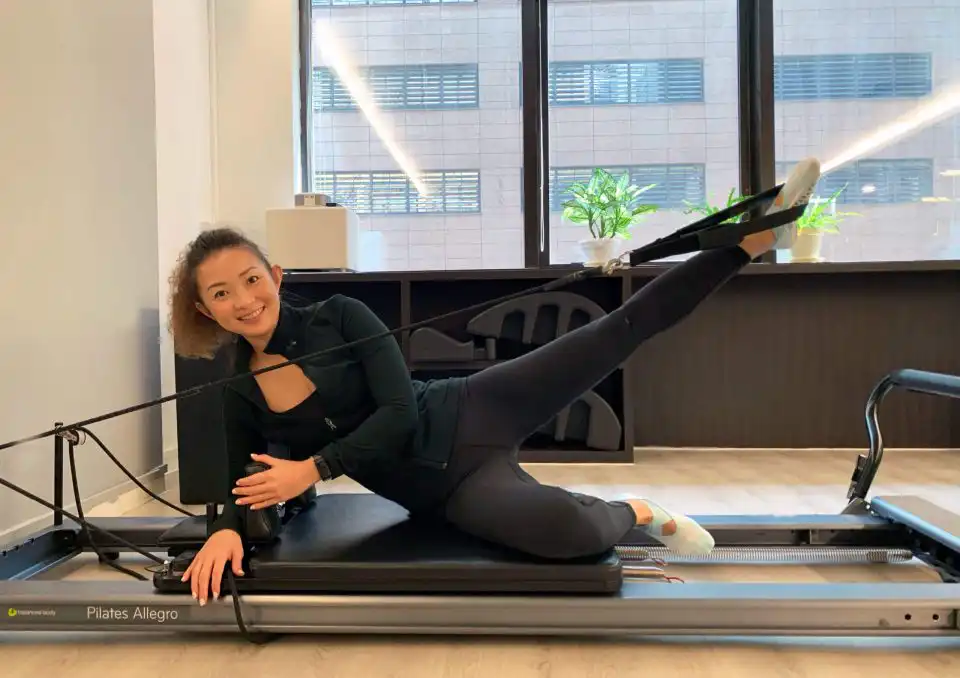
The Reformer – The Starting Point for Many
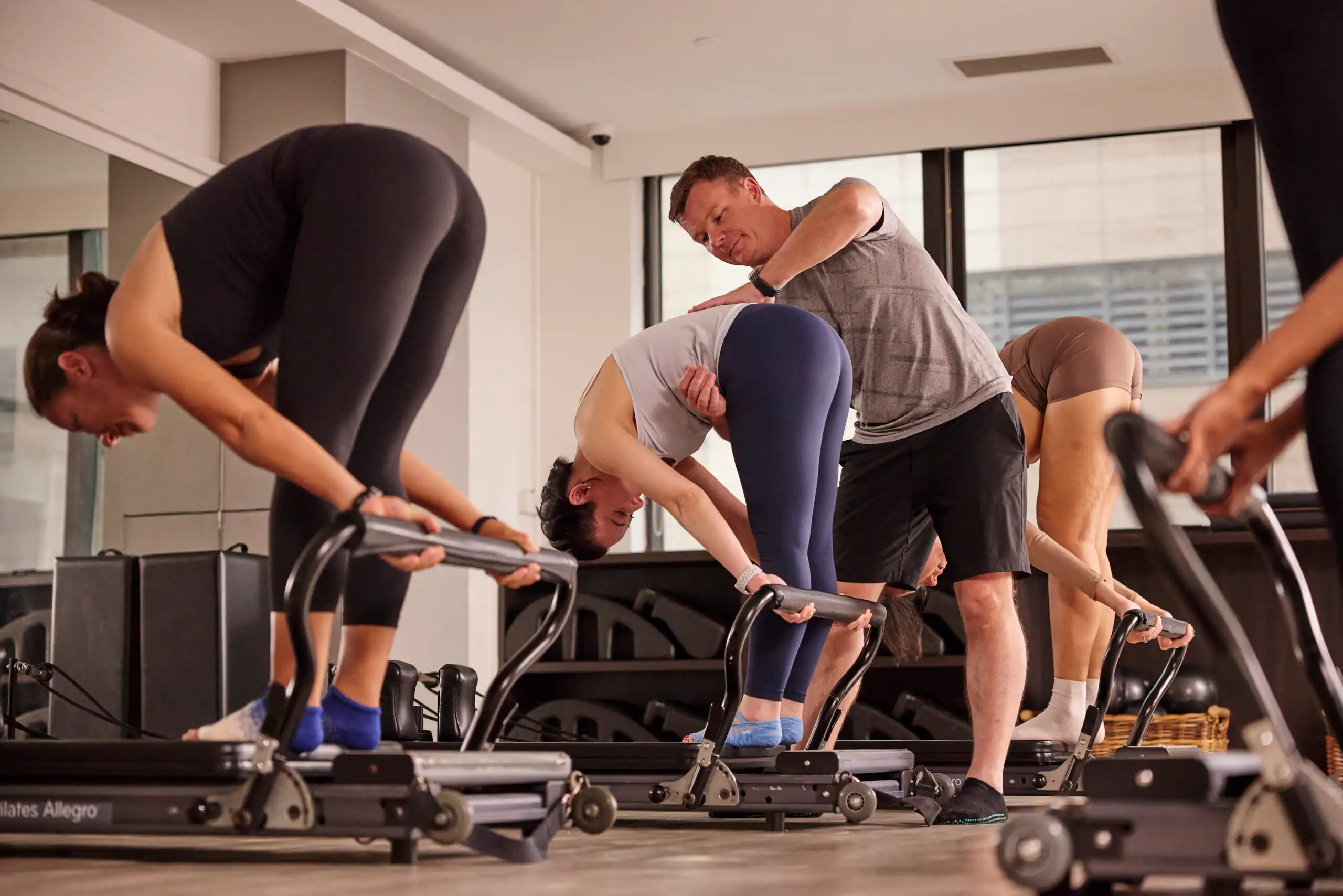
While the Mat forms the foundation of Pilates and used to be the starting point for practitioners, the Reformer has gotten a lot of attention in recent years due to the popularity of group Reformer classes. It has drawn plenty of curiosity and is now the starting point of Pilates for many. With a moving carriage, adjustable springs of various amounts of resistance, and versatile straps, the Reformer offers an assistive full-body workout that improves strength, mobility, and coordination. It’s ideal for group classes because it provides a more consistent setup and clear progressions for everyone in the room.
Chosen by physiotherapists for rehabilitation
Physiotherapists gravitate toward the Reformer for rehabilitation because it’s uniquely suited to bridging the gap between early-stage rehab and functional, real-world movement. It offers adjustable resistance for graded progression in a supportive and low impact environment, and physiotherapists like that they can simulate daily or sport-specific actions in a controlled way. Think squatting, lunging, reaching, pushing and pulling – all while monitoring load, alignment, and pain response. This accelerates the transition from rehab to full activity and makes it more supported and less technical than Pilates on the Mat.
But while the Reformer alone can deliver amazing results, it represents just one slice of the Pilates method. Joseph Pilates envisioned his exercises moving fluidly between different apparatus so the body could learn, integrate, and adapt from all angles.
The Wunda Chair
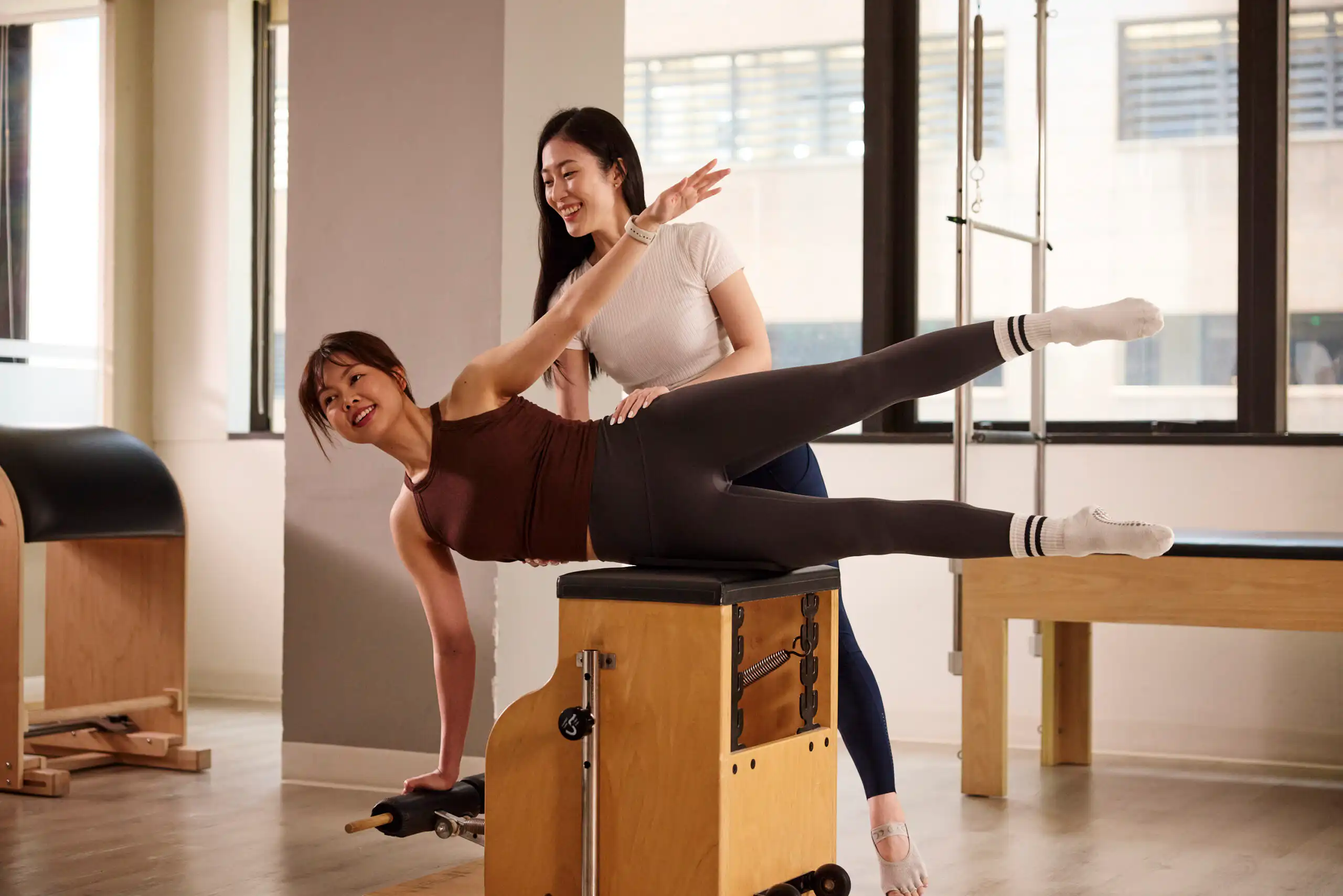
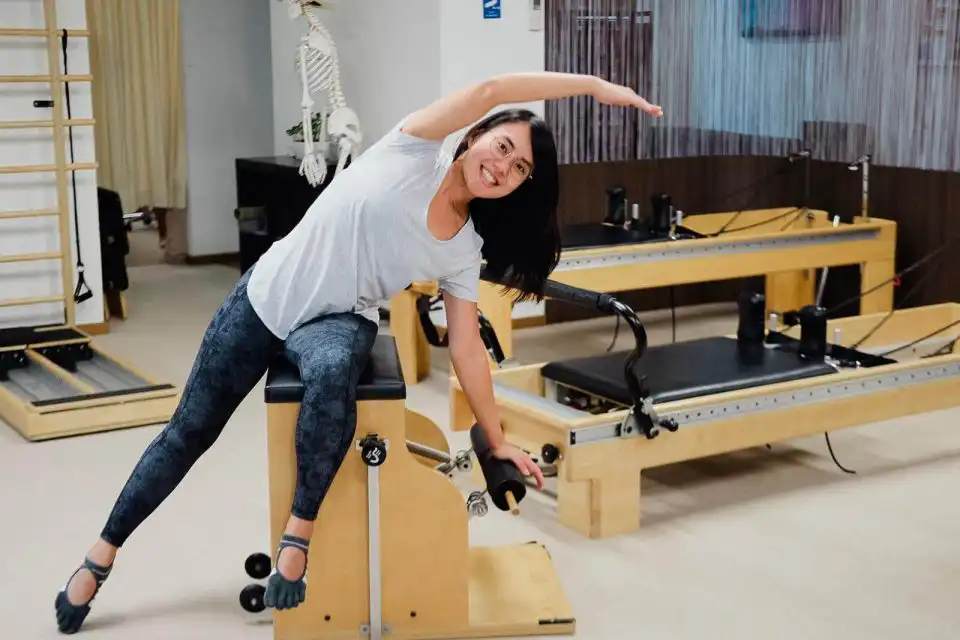
The compact but mighty Wunda Chair puts you in a smaller, more vertical base of support. That makes it ideal for training functional movements you use in everyday life – standing up, climbing stairs, pushing off, or balancing on one leg.
The pedal (spring-loaded) can move separately or together. This challenges your balance and coordination, requiring your core and stabilisers to work harder. This makes the Chair excellent for improving pelvic, hip, and shoulder stability.
From athletic training to rehab support:
Because the base is small and the springs can be heavy, Chair exercises can be very demanding. It’s often used to progress clients from supportive work on the Reformer/Cadillac to more athletic, load-bearing movements.
The pedal can also assist movement for clients recovering from injury – helping them feel hip extension, shoulder flexion, or spinal articulation with support. It’s a great bridge between lying-down rehab work and standing, functional work.
The Barrels (Ladder Barrel, Spine Corrector)
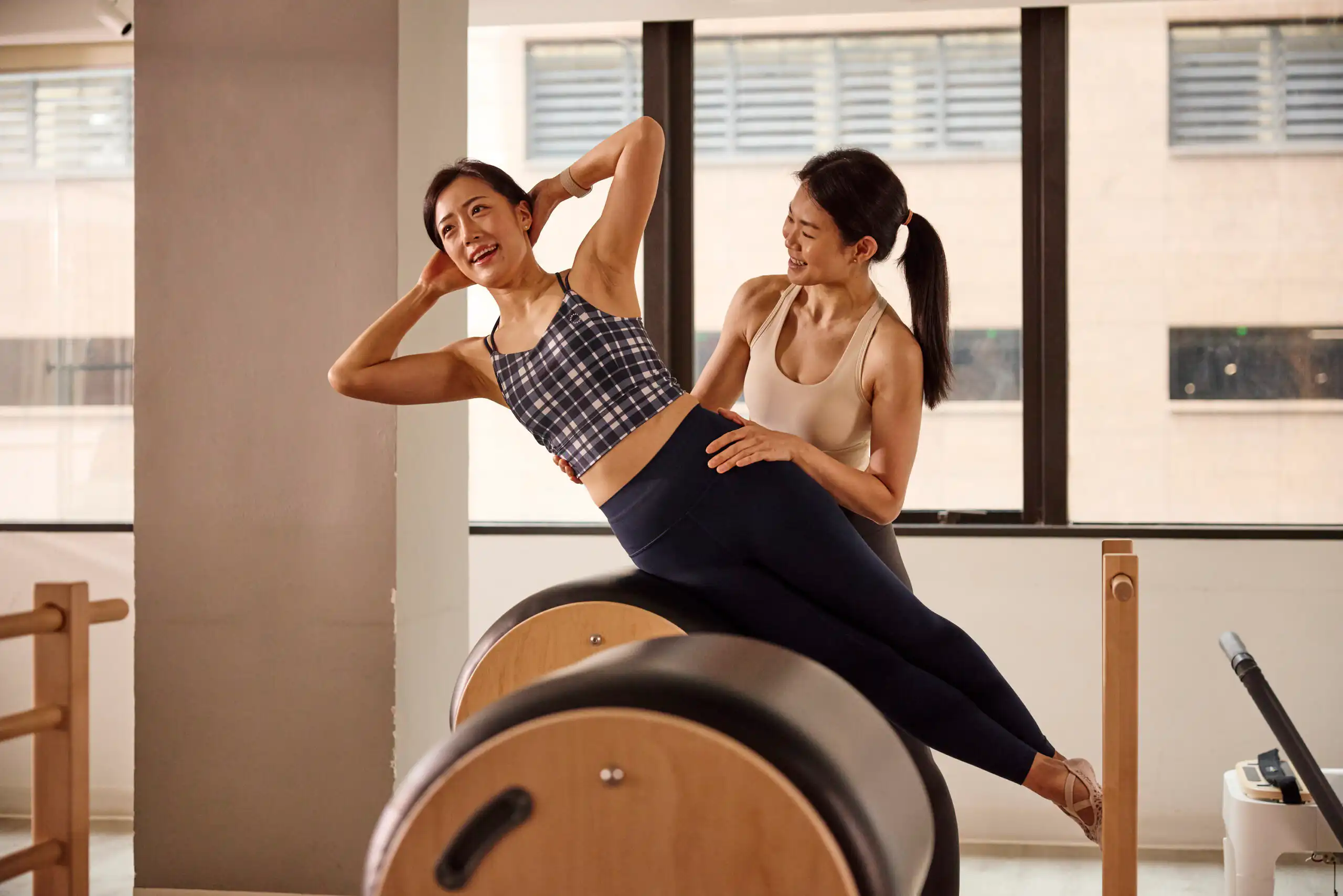
The Ladder Barrel’s curved surface is ideal for training extension, flexion, lateral flexion and rotation of the spine. It supports the natural curves and structure of the body so you can safely move into ranges of motion – especially extension – that can be harder on the mat. This makes it great for teaching segmental control and mobilising the spine in a supported way.
Smaller barrels, arcs, and tools that target precise areas of the body – deepen core activation, or release tightness.
Supported spinal mobility and posture work:
The clear landmarks of the ladder and the barrel’s curve give tactile feedback so clients can feel alignment and control. It’s also a confidence builder for clients nervous about back-bending or deep stretches. Using the ladder rungs as an anchor and the barrel’s curve for support, you can lengthen tight areas (like hip flexors, hamstrings, or chest) while building strength in opposing muscles (like glutes, back extensors, or obliques). This “stretch while you strengthen” approach is a hallmark of the barrel.
By improving spinal mobility in different planes with support, you’re better prepared for activities like swimming, tennis, golf, and simply standing taller with less strain.
The Trapeze Table
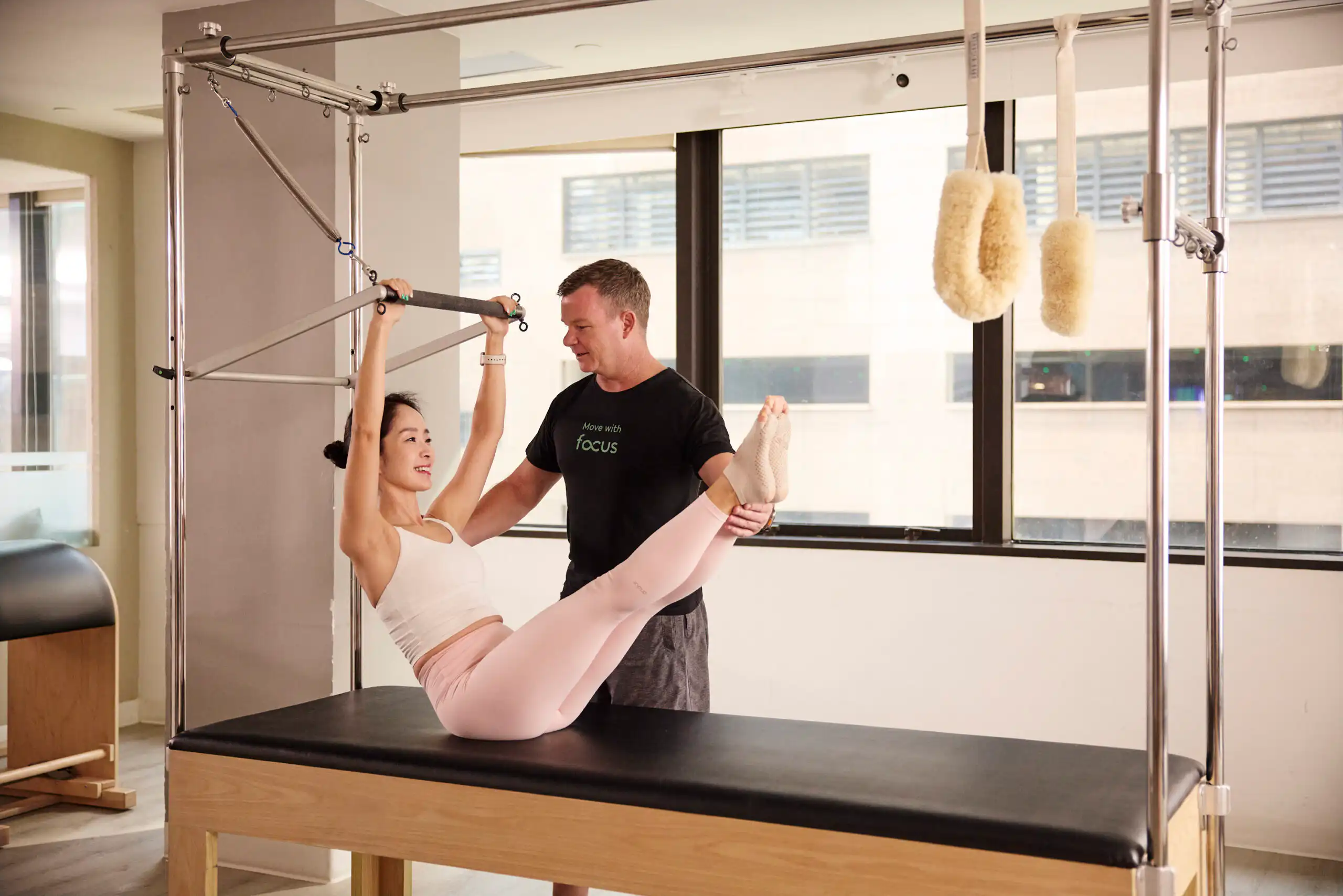
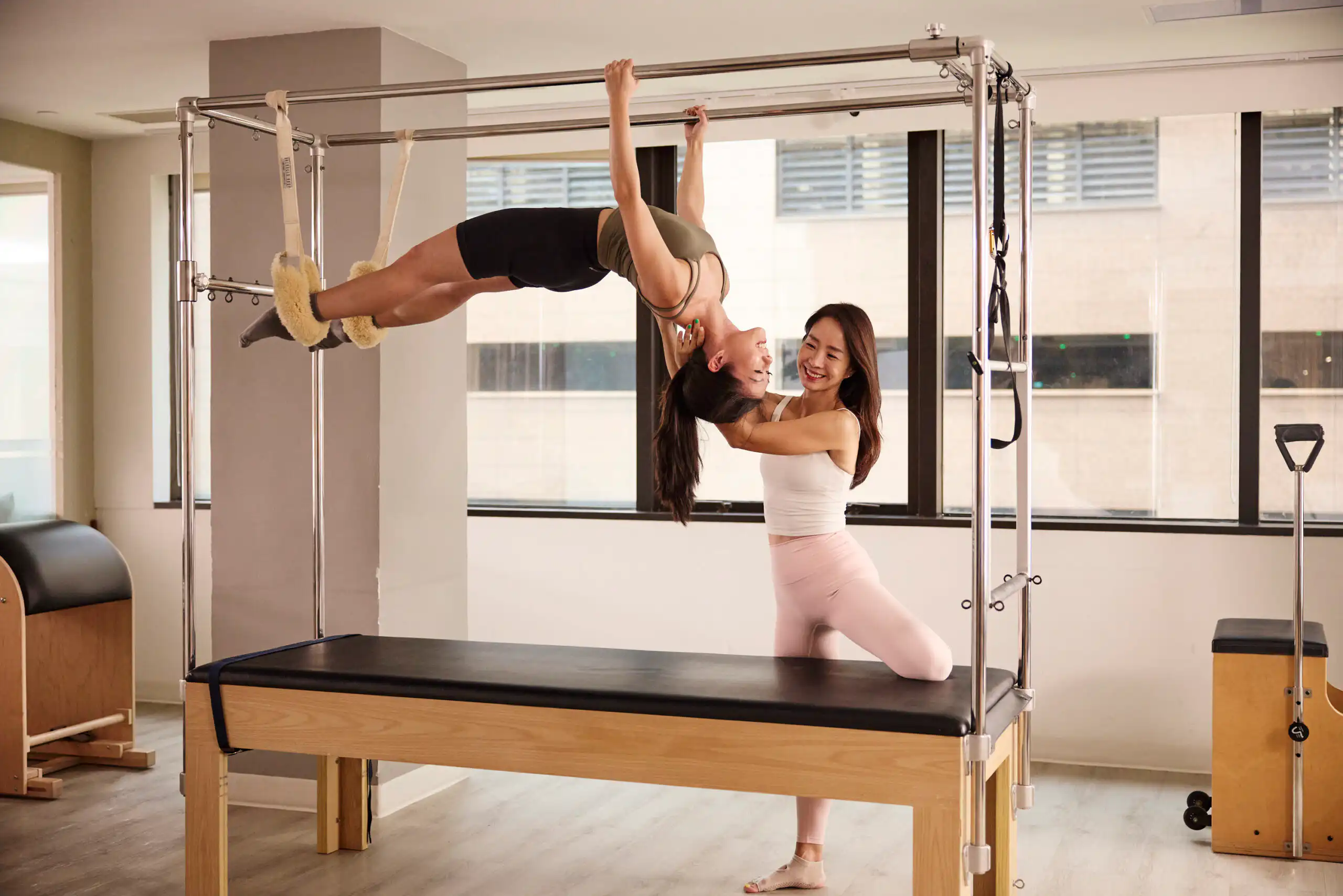
The Trapeze Table is a big frame with bars and springs that allow for hundreds of variations to be performed, from rehab support to hanging and inverted work that may be required by athletes.
Because it’s a large, stable table with an overhead frame, the Trapeze Table lets clients work lying down, sitting, kneeling, or standing with lots of support from springs, straps, push-through bars and the trapeze. This diverse and comprehensive set up makes the Trapeze Table the most versatile piece of Pilates equipment – it’s often a creative playground for instructors, offering endless variations!
Versatility Across Movement Patterns:
Thanks to its multiple attachment points, the Trapeze Table can mimic almost any plane of motion -flexion, extension, rotation, lateral flexion – you name it! It can assist a movement (e.g. supported roll-downs, leg springs for hip work), resist a movement (e.g. spring-loaded arm pulls, push throughs) and allow you to work in closed or open-chain positions, allowing instructors to design highly tailored programs for individuals of any background.
Pilates for pregnancy, neurological conditions, scoliosis, or individuals rehabbing a specific injury can all be addressed on the Trapeze Table. Beyond rehab, the Trapeze Table can become very athletic – think hanging, inverted work, or dynamic push-through bar exercises. This helps advanced clients build power, control and confidence in new ranges of motion.
The Mat – The Foundation of the Method!

Long before Joseph Pilates built his studio apparatus, he taught a sequence of exercises on the floor. These mat exercises were designed to be done anywhere – no springs, straps or bars – using only your own body weight and gravity for resistance. In many ways, Mat Pilates is the purest expression of the method.
Mat Pilates can feel harder for beginners because you don’t have springs or bars to guide you. The apparatus actually helps you find correct alignment and build strength in a supported way. That’s why Joseph Pilates saw the apparatus and matwork as complementary – the equipment teaches your body the movement, and the mat tests if you can do it on your own!
Practicing on the mat is a fantastic way to build endurance and consistency, while the use of equipment can accelerate your understanding by giving you feedback and variety. Together they create a full, well-rounded Pilates practice.
Why Private Sessions Unlock the Full Method
Group Reformer classes are an accessible, energising way to begin your Pilates journey. However, private sessions give you something a group setting simply can’t:
- Customisation. Your instructor chooses the apparatus and spring settings to meet your unique goals, abilities, and any injuries.
- Faster Progress. You’ll experience how the different apparatus “talk back” to your body, giving you clearer feedback on alignment and control.
- Safety & Confidence. Some of the most beneficial equipment – like the Trapeze Table or Wunda Chair – involves more attention to safety and individualised setups that aren’t practical in a group class.
Exploring the full range of equipment in a one-on-one setting helps you understand the method as Joseph Pilates intended: a complete system, not just one machine. Think of Pilates equipment as a family of tools, each designed to teach your body something new. The Reformer is a wonderful place to start – but the magic really happens when you combine it with the other apparatus under the guidance of a skilled instructor.
At Focus, we’ve chosen to outfit our studio with Balanced Body® equipment, the global benchmark for quality and safety in Pilates. This ensures you experience the smoothest springs, most stable frames, and thoughtfully engineered features – so you can move with confidence and get the most from every session.
If you’re curious about how different pieces can elevate your practice, consider booking a trial private session. You’ll gain a deeper appreciation for the Pilates method and discover new ways to move, strengthen, and feel your best.
October 2025 Promo: Enjoy your first Private Pilates Session at $100 (U.P. $145) and receive a free pair of Focus grip socks!
Check the appointment schedule and book a session here