
Knee Pain
Knee Pain
Knee Pain
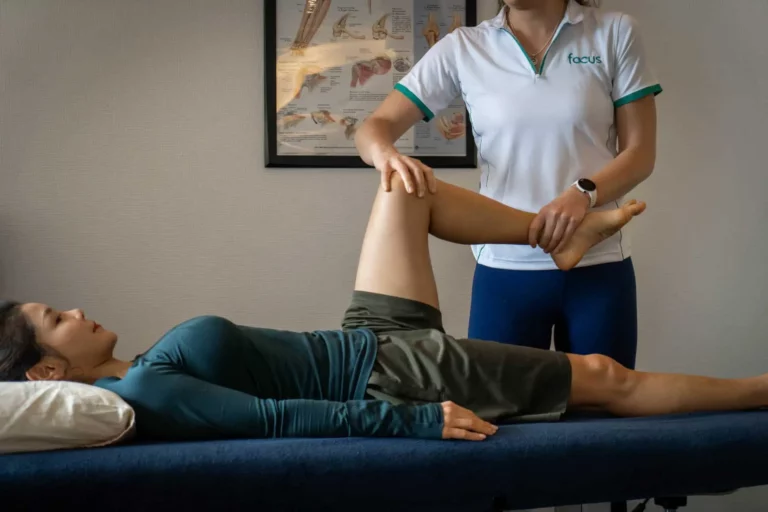
Knee pain can drastically affect your mobility, so we provide a thorough assessment and range of treatments along with personal training to manage pain and prevent further injuries.
Assessment
Assessment is very important as biomechanics and muscle imbalance play an important role in injury management and preventing injuries.
Treatment
- Ultrasound and/or other electrotherapy modalities to reduce inflammation, swelling and pain. Some modalities can also be used to stimulate muscle contraction in severe cases.
- Soft tissue therapy to assist with ligament healing and restructuring/remodelling of sprained/torn fibres.
- Specialised home exercise programme to stretch tight structures and strengthen weak ones.
- Pilates is very beneficial for knees as it helps with alignment, posture and correction of biomechanical issues and prevention of further injuries.
- Pilates can slow down the deterioration process with OA knees.
- Pilates can be useful for many specific sports such as running, skiing, golf and tennis.
Common types of injuries
- Ligaments sprains and tears – anterior cruciate ligament, posterior cruciate ligament, medial collateral ligament and lateral collateral ligament.
- Meniscus injuries – injuries of two small cushions within the knee joint (could be tear or contusion).
- Osgood Schlatter’s disease – a painful swelling of the bump on the upper part of the shinbone, just below the knee. It occurs during adolescants as the patellar tendon is overused before bone growth has peaked.
- Osteoarthritis (OA) – wear and tear in the knee joint, which causes inflammation and pain.
- Patella-femoral (anterior knee) pain syndrome – mechanical pain that is not caused by any significant damage to the structures in the knee such as the ligaments, tendons and bone.
- Patella fracture – fracture of the kneecap, normally after a fall or direct blow to the patella.
- Patella tendonitis – inflammation or degeneration of the tendon at the base of the knee cap leading to pain and discomfort in the area.
- Ilio-tibial band friction syndrome – lliotibial band syndrome (ITBS) is the result of inflammation and irritation of the iliotibial tendon as it rubs against the bone at the outer part of the hip or knee. It commonly causes knee pain in long distance runners.
Get moving again
Speak with one of our physiotherapists to see how we can help you with your condition and injury so we can get you moving pain free again.
Explore More Physio Treatment
Neck Pain
Posture, muscular imbalances and cervical vertebrae alignment are three of the most important factors we look at to determine an accurate diagnosis for your neck pain.
- 30 Min
- 45 Min
- 60 Min
Back Pain
To determine the issue, we assess the nervous system, back and pelvic muscles, and the range of movement in the spine. Back pain can stem from many different types of injuries, so a thorough assessment is crucial to determine the source of the pain.
- 30 Min
- 45 Min
- 60 Min
Knee Pain
Knee pain can drastically affect your mobility, so we provide a thorough assessment and range of treatments along with personal training to manage pain and prevent further injuries.
- 30 Min
- 45 Min
- 60 Min